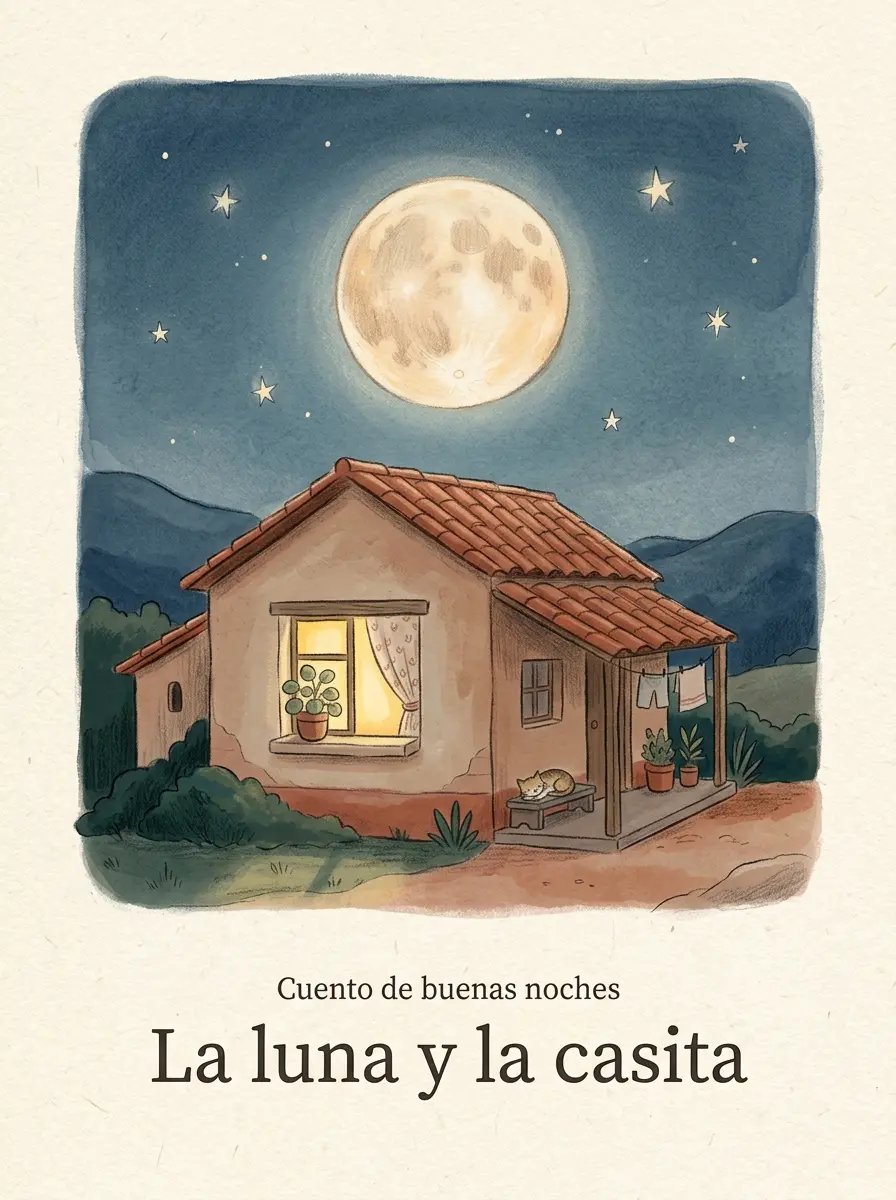
La luna y la casita
The Moon and the Little House
A poetic bedtime story about moonlight, a little house, and the quiet of night.
La luna y la casita (The Moon and the Little House) is a short Spanish bedtime story for ages 4-7, written with one simple sentence per page and a calm, repetitive rhythm. It is designed for beginners and for parents who are not fluent — read it slowly, point to the pictures, and let the repetition do the teaching. You can read it online below or print it as part of the free starter pack.
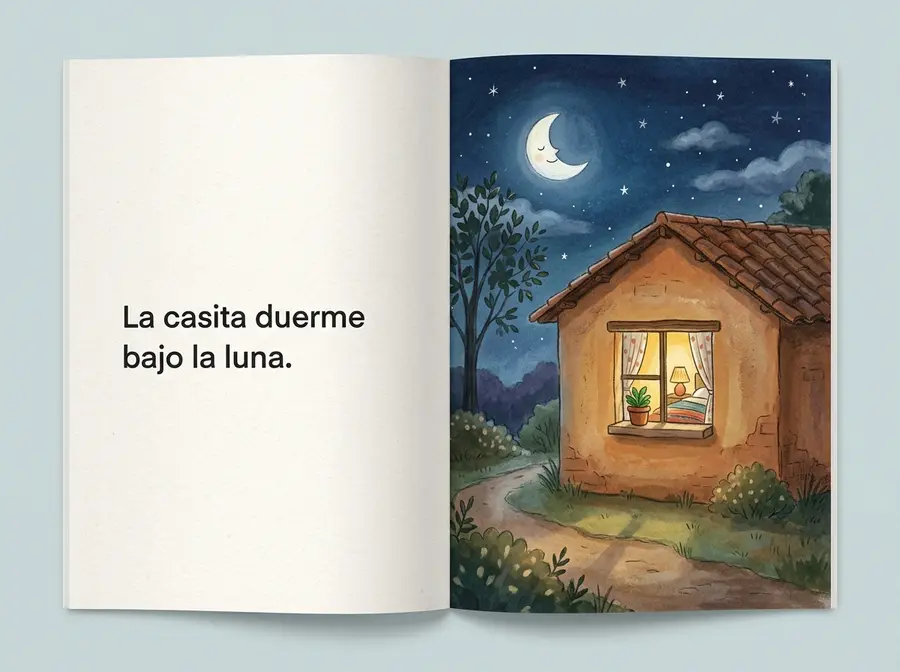
Preview spread
A calm storybook preview
Printable PDF
What this storybook includes
- • 8 short story pages
- • one sentence per page
- • beginner-friendly bedtime vocabulary
- • calm read-aloud flow for non-fluent parents
- • printable bedtime-story format
Read online
One sentence per page
La luna mira la casita.
La casita tiene una ventana.
Una luz brilla en la ventana.
La luna sube en el cielo.
La luz se apaga despacito.
La casita está en silencio.
La luna cuida la casita.
La casita duerme bajo la luna.
Vocabulary
How to use tonight
Use your finger to trace the moon over the house on each page if you have pictures.
Emphasize little words like la, y, and duerme to build comfort with simple Spanish sentences.
Ask one soft question after reading, like '¿Quién cuida la casita?'.
Want more bedtime stories like this?
Get the bedtime story starter pack and begin building a calm, printable Spanish bedtime routine at home.
Questions about this story
Is "La luna y la casita" good for a child who is just starting Spanish?
Yes. La luna y la casita (The Moon and the Little House) uses one short sentence per page and a small set of repeated, beginner-friendly words, so it works well for ages 4-7 and for families who are not fluent.
How long does it take to read?
About 3 min read. It is meant to be read slowly and calmly, and re-read on several nights so the language sinks in through repetition.
Do I need to speak Spanish to read it aloud?
No. The story is designed for non-fluent parents — read each Spanish line slowly, point to the pictures or key words, and use the vocabulary list when you need it. You do not have to translate every word.